Mumbai Turns 500 Tonnes of Plastic Waste Into Benches
Through the Mumbai Plastic Recyclothon, over 500 tonnes of waste have been recycled into benches, desks, bins, tiles and pathways across the city.
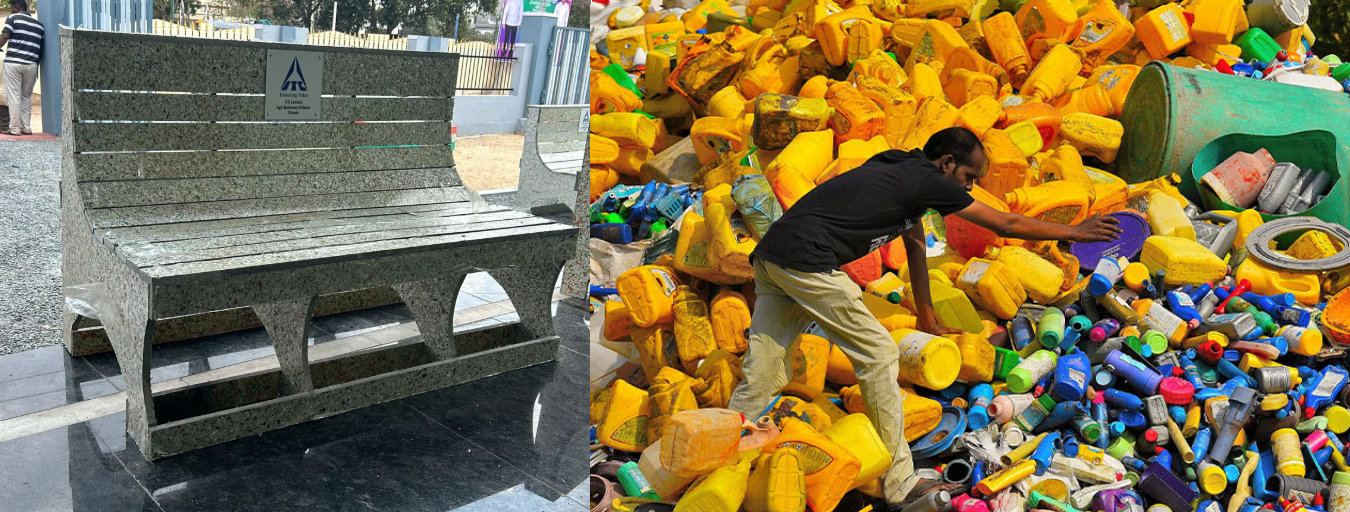
Mumbai, Oct 2025: Mumbai has given a powerful message on sustainability — waste is not the end, but a beginning. Through the Mumbai Plastic Recyclothon (TMPR), a citizen-driven initiative launched by L&T Energy Hydrocarbon in collaboration with Project Mumbai, over 500 tonnes of plastic waste have been recycled into public amenities including benches, school desks, tiles, dustbins, flowerpots and pathways across the city.
One such example stands in Bandra Kurla Complex (BKC), where a brightly coloured bench tells its story with an inscription: “This bench is made out of recycled plastic waste.” It’s part of a set of 404 benches, among other products, now integrated into Mumbai’s public spaces.
From Waste to Utility
The idea was born during a beach clean-up drive, when the sheer magnitude of plastic waste compelled the team to find a permanent solution. Since then, the Recyclothon has turned plastic waste into 404 garden benches, 286 school desks, 266 dustbins, 240 flowerpots and nearly 9,000 metres of recycled pathways, distributed across schools, BMC gardens, and public spaces.
A monthly collection drive operates across 45 locations in Mumbai — including housing societies, schools, offices, and colleges. Families segregate plastic waste, which is then crushed, moulded into pellets, and converted into durable utilities. Each item comes with audit certification, assuring citizens that recycled material has been authentically used.
Citizen-Led Movement
The initiative has engaged over one lakh families and attracted a volunteer base of four lakh citizens, making it one of Mumbai’s largest citizen-led waste management movements.
“Children especially get excited when they see waste turning into something useful — like benches or pencil boxes,” says Project Mumbai’s founder and CEO Shishir Joshi. “It changes the way people think about recycling.”
Tackling India’s Plastic Crisis
India has been called a plastic pollution hotspot, generating an estimated 9.3 million tonnes of mismanaged plastic waste in 2020, according to a study by the University of Leeds. Mumbai alone contributes significantly to this figure, with waste often ending up in landfills or oceans.
By recycling over 500 tonnes of plastic waste and removing nearly 40,000 kg from beaches and water bodies, the initiative provides a sustainable model for urban India.
A Bench, A Message
For passers-by, the recycled benches serve as more than just seating — they are conversation starters. Each one silently reminds the city that waste, when managed responsibly, can be transformed into something meaningful and lasting.
As one CSR head at L&T put it: “This is full-circle impact — citizens not only recycle their waste, but they also get to sit on it, walk on it, and use it in schools and gardens. It’s sustainability that you can touch and feel.”