3rd Australia–India Education & Skills Council Charts New Path for Global Skill Mobility
The 3rd AIESC meeting in New Delhi strengthened Australia–India cooperation to boost skills, mutual recognition, and global mobility for youth.
The 3rd Australia–India Education & Skills Council (AIESC) convened today in New Delhi, setting a forward-looking agenda to strengthen bilateral cooperation in skill development, training innovation, and cross-border workforce opportunities. Senior leaders from both countries reiterated their commitment to building a future-ready workforce through deeper institutional partnerships and harmonized skill frameworks.
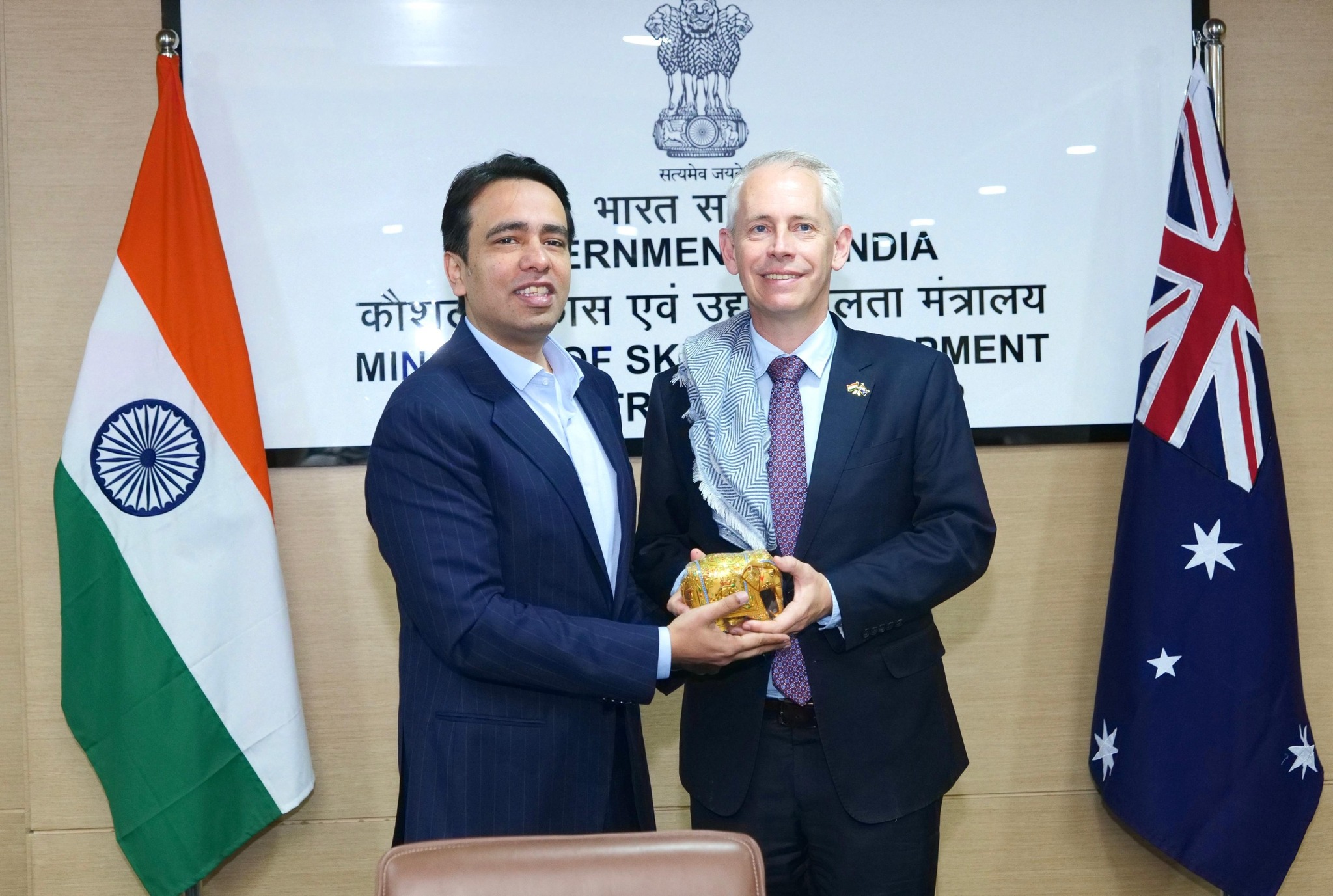
Earlier in the day, a high-level Bilateral Meeting was held at Kaushal Bhawan between Shri Jayant Chaudhary, Hon’ble Minister of State (Independent Charge), Ministry of Skill Development & Entrepreneurship (MSDE), Government of India, and Hon. Andrew Giles MP, Australian Minister for Skills & Training. The meeting focused on accelerating collaboration in priority growth sectors including sports, construction, mobility trades, and emerging technologies shaping the global labour market.
Both Ministers emphasized that India and Australia share a long-standing vision for empowering youth through international skilling, aligned standards, and industry-led training ecosystems. The discussions highlighted ongoing frameworks as well as new joint initiatives designed to:
Strengthen Mutual Recognition of Skills & Qualifications to ensure Indian and Australian trainees can transition seamlessly into overseas opportunities.
Develop Industry-Aligned Bridge and Pathway Programs co-designed by training institutions and sector skill bodies of both countries.
Enhance Talent Mobility by creating clear migration and placement routes in sectors where both nations face skill shortages.
Promote Collaboration in New-Age Skills including AI, cybersecurity, renewable energy, advanced manufacturing, and digital trades.
Expand Institutional Partnerships between universities, TAFEs, Sector Skill Councils, and Indian training providers.
Addressing the Council, Shri Jayant Chaudhary noted that India’s rapidly growing skill ecosystem—fueled by digital training, apprenticeship expansion, and international partnerships—makes it a natural partner for Australia’s skilled workforce needs. He stressed that aligned competency standards and long-term frameworks will help Indian youth access high-quality global employment.
Hon. Andrew Giles MP reaffirmed Australia's commitment to building a transparent, inclusive, and future-oriented mobility system. He commended India’s efforts in scaling high-impact skilling programs and expressed confidence that the partnership would “create pathways that genuinely uplift workers and address skill shortages in both economies.”
The AIESC sessions also featured working groups and technical discussions on qualification mapping, capacity-building collaborations, joint curriculum design, credit transfer models, and partnerships for sustainable skill ecosystems.
With both sides committed to strengthening government-industry-training institute collaboration, the 3rd AIESC marks a significant step towards a mutually beneficial, globally competitive skill mobility framework. The outcomes of this Council are expected to shape long-term strategies in workforce development and open new international opportunities for youth from both countries.